
About DAY
The History of Dayton International Airport
Few places in the world can claim a richer aviation heritage than Dayton, Ohio. From the Wright brothers’ first experiments in powered flight to the growth of one of Ohio’s largest airports, DAY has played an important role in the story of aviation for nearly a century.
Today, DAY serves as a gateway to the Miami Valley while carrying forward a legacy that began with two brothers determined to fly.
1896–1905
The Wright Brothers and the Birth of Aviation
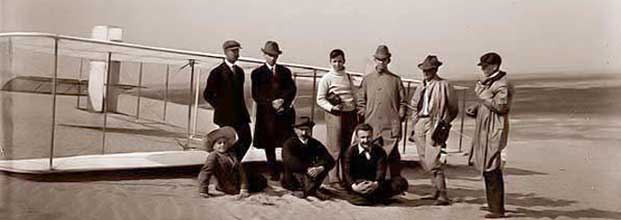
Perhaps no other place on earth has contributed more to aviation than Dayton, Ohio. The story began in 1896 when Orville and Wilbur Wright started experimenting with the principles of flight. Their efforts culminated on December 17, 1903, in Kitty Hawk, North Carolina, with the world’s first successful powered flight.
The Wright brothers continued refining their designs in Dayton, including the Wright Flyer III, recognized as the world’s first practical airplane and first flown at nearby Huffman Prairie in 1905.
1928–1936
The Creation of Dayton Airport
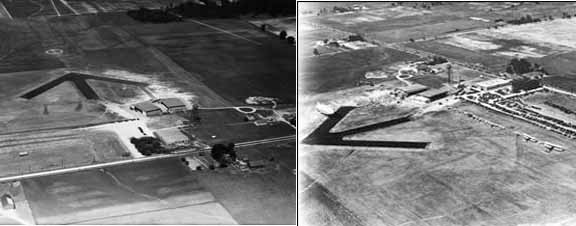
Inspired by the growing fascination with aviation, a group of Dayton business leaders—including executives from Frigidaire, NCR, and General Motors—formed Dayton Airport, Inc. in 1928.
The company acquired more than 300 acres north of Dayton near Vandalia and developed what became the region’s first modern airport. The facility officially opened to the public during a dedication celebration held on July 31 and August 1, 1929.
Despite the airport’s promising start, the Great Depression created financial challenges, and the airport eventually entered receivership.
1936–1945
Dayton Municipal Airport
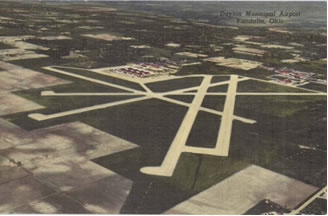
Recognizing the airport’s importance to the community, Dayton native James M. Cox helped lead a successful campaign to purchase the airport and transfer ownership to the City of Dayton.
On December 17, 1936—exactly 33 years after the Wright brothers’ first flight—the newly named Dayton Municipal Airport officially opened with three concrete runways and daily airline service.
During World War II, the airport became an important military facility and was designated Dayton Army Airfield. Major airfield improvements expanded its capacity and laid the foundation for future growth.
1945–1960
Postwar Growth
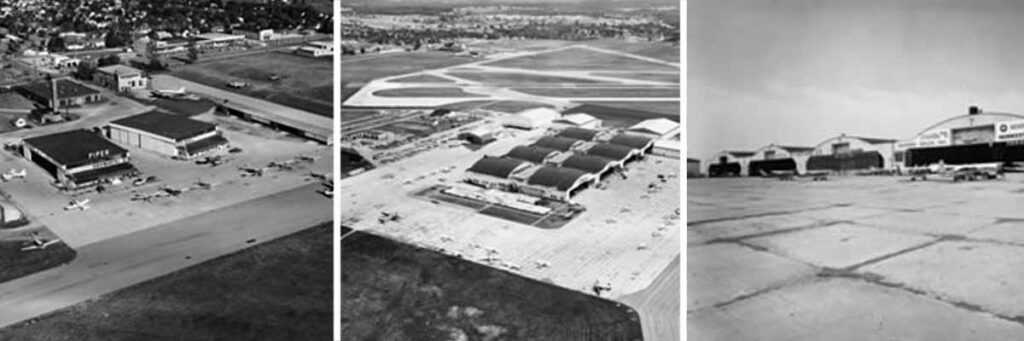
Following World War II, the airport underwent significant expansion as military property was transferred to the City of Dayton.
By the early 1950s, the airport had been renamed James M. Cox–Dayton Municipal Airport in honor of the former Ohio governor and newspaper publisher whose leadership helped secure the airport’s future.
Growing passenger demand led to plans for a new terminal building, supported in part by federal funding. Construction began in 1959 on a modern terminal designed to meet the region’s expanding air travel needs.
1960–1980
The Jet Age
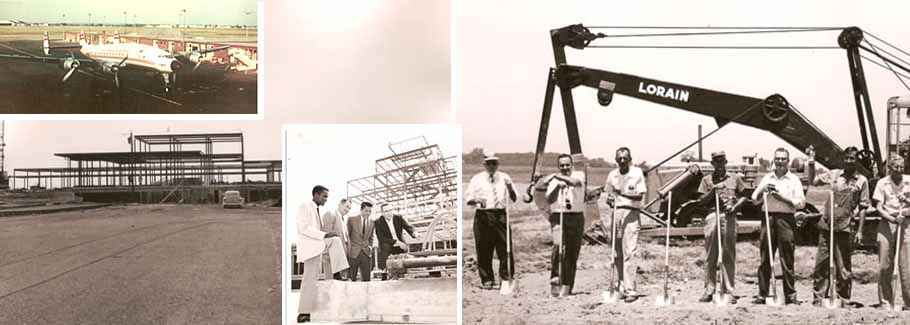
The airport entered the jet age in 1960 when TWA introduced jet service to Dayton.
In 1961, a new passenger terminal opened, complete with improved roadway access and modern passenger facilities. During the 1960s, the airport’s runway system was transformed into a configuration similar to the one in use today, including construction of Runway 6L/24R.
In 1975, the airport received its current name, James M. Cox Dayton International Airport.
That same year, U.S. Customs and Border Patrol established a presence at the airport, supporting international operations.
1980–2000
Cargo, Hubs & Expansion
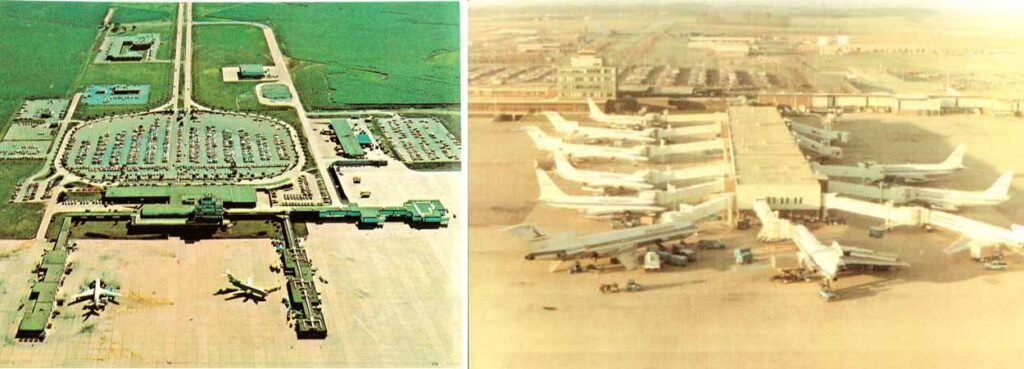
The 1980s marked a period of significant growth.
Emery Worldwide established one of the world’s largest air cargo sorting facilities adjacent to the airport, helping elevate DAY’s role in national freight operations. At the same time, Piedmont Airlines selected Dayton as a Midwest hub, dramatically expanding nonstop service throughout the country.
In 1986, more than 4.5 million passengers traveled through the airport, a record that reflected Dayton’s growing importance within the national air transportation system.
Major terminal renovations followed, including a $50 million modernization project completed in 1989.
2000–Today
A Modern Airport

The new millennium brought continued investment and transformation.
Highlights include:
- Terminal modernization completed in 2002
- Frontier Airlines service launch in 2005
- Airport master plan completed in 2008
- Air Canada international service introduced in 2008
- Three-level parking garage opened in 2010
- New FAA control tower commissioned in 2011
- Checkpoint, baggage screening, and terminal improvements completed in 2011–2012
Today, Dayton International Airport encompasses more than 4,500 acres and continues to serve as a critical transportation and economic asset for Southwest Ohio.